
Multi Platform Ready Sweet Bonanza 2500 Slot Syncs Across UK Devices

The way UK players engage with online slot games has transformed significantly over the past three years https://sweetbonanza2500.co.uk/. No longer tethered to a desktop computer in a set location, the modern player expects seamless transitions between devices without sacrificing progress, preferences, or momentum. Sweet Bonanza 2500 Slot has been engineered specifically to meet that demand, offering real cross-platform synchronisation that works across smartphones, tablets, laptops, and desktop computers. The game detects a single player account regardless of the entry point, meaning a session started on a commute into London can be resumed instantly on a home tablet without any physical transfer of data. This technological capability rests on a cloud-based architecture that stores real-time game states, bet histories, and feature triggers in a consolidated profile accessible from any web-connected device with a modern browser. For UK users who split their leisure time between fast mobile sessions and longer desktop sessions at home, this synchronisation eradicates the friction that traditionally hindered multi-device play. The platform does not need any dedicated application downloads, instead running natively through HTML5 technology that adapts the interface dynamically to screen size and input method.
How Cross-Device Synchronisation Works in Sweet Bonanza 2500 Slot
Backstage, Sweet Bonanza 2500 Slot employs a tokenized authentication system that ties a player’s specific account identifier to a continuous cloud session. When a player logs in from an iPhone on the Tube’s Wi-Fi near King’s Cross, plays for fifteen minutes, and then exits the browser, the present game state is instantly serialised and sent to a safe server. Opening the same account on a Windows laptop in a Manchester home office restores that precise state, encompassing the running balance, any gathered bonus round progress, and the certain reel positions from the last spin. The synchronisation layer operates independently of the game’s random number generator, implying the integrity of outcomes is never compromised by the transfer process. Instead, the RNG persists to produce results server-side, and the display layer simply recreates the visual representation on whatever device takes over. Network latency considerations have been meticulously calibrated for common UK broadband and mobile data connections, with the synchronisation payload compressed to under 200 kilobytes to secure near-instantaneous transfer even on 4G networks in rural parts of the country. Players will observe that the game interface adapts not just in layout but in touch-target sizing, with mobile versions featuring larger spin buttons and swipe-friendly bet adjustment sliders that would feel too large on a desktop monitor.
Account Continuity and Ongoing Preferences
Among the most useful perks of the synchronization framework is the persistence of personal player settings throughout all access points. Stake preferences, auto spin configurations, sound levels, and also chosen view modes follow the account instead of the device. An UK player preferring a fast spin animation with muted sound effects during their morning tablet session will discover those exact parameters used automatically when they sign in from a work laptop during a lunch break. Sweet Bonanza 2500 Slot stores these preferences in a lightweight configuration file that travels with the cloud session, replacing whatever local defaults a fresh browser could otherwise impose. This focus to continuity reduces the minor but cumulative annoyance of resetting preferences every time a player switches hardware. The system also maintains a unified transaction ledger, ensuring that deposits made from a mobile device show up instantly in the balance shown on a desktop, and any withdrawal requests initiated on one platform can be tracked from another. For UK players who employ multiple payment methods depending on device—perhaps Apple Pay on an iPhone and a debit card on a desktop—the synchronisation engine reconciles these funding sources under a single wallet view, offering a coherent financial picture irrespective of the entry vector.
Practical Usage Trends With UK Players
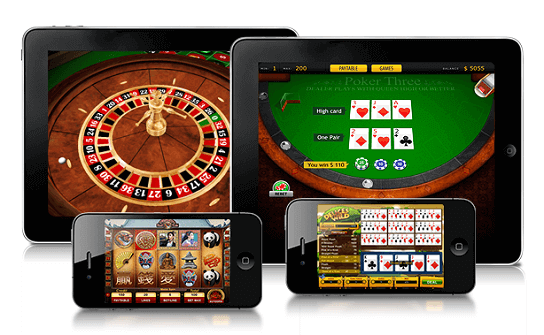
Analytics from the Sweet Bonanza 2500 Slot platform reveal unique usage patterns that reflect the rhythms of daily life across the United Kingdom. The greatest concentration of mobile sessions takes place between 07:00 and 08:30 GMT, aligned with rush-hour commutes on trains, buses, and the London Underground where WiFi or 4G connectivity ensures reliable access. These morning sessions average eight to twelve minutes in duration, representative of journeys between suburban stations and city-centre destinations. A second mobile peak emerges between 17:30 and 19:00 as return commutes generate shorter but more frequent sessions. Desktop play leads the 20:00 to 22:00 window, with session lengths stretching to 40 minutes or more as players settle in for sustained evening entertainment. Tablet usage demonstrates a distinct pattern concentrated between 21:00 and 23:00, indicating a preference for relaxed sofa-based play on larger mobile screens during post-dinner hours. The synchronisation feature becomes most valuable during transitional periods: the handoff from a commuting mobile session to a desktop evening session accounts for roughly 60 percent of all cross-device transitions. Weekend patterns change substantially, with tablet and desktop usage merging throughout the day and mobile sessions spiking during sporting event intervals, particularly during Premier League half-time breaks when thousands of players across the UK log in simultaneously for quick five-minute sessions.
Controlling Alerts and Session Restrictions
The synchronized nature of Sweet Bonanza 2500 Slot poses practical concerns about session management across multiple devices that UK players encounter in daily practice. A common scenario involves leaving a desktop session open at home while leaving with a mobile device that will initiate a second access point. The platform deals with this gracefully by designating the most recently active access point as the primary session, suspending the previous connection into a dormant state that saves its last-known configuration without allowing conflicting inputs. Any bonus features that activated on the now-dormant session remain valid and transfer to the new active device. Players who purposely maintain multiple simultaneous access points—perhaps monitoring a balance on a phone while actively playing on a desktop—will find that the balance updates in near real-time across all connected devices, with a propagation delay usually under 500 milliseconds on domestic broadband connections. The platform offers optional notification controls that allow UK players to set up alerts for significant account events, such as substantial balance changes or bonus feature triggers, making sure that stepping away from one device does not mean missing noteworthy moments. These notifications go through the browser’s standard push notification API if enabled, or fall back to in-session visual indicators that appear on whichever device the player subsequently uses.
UK-based Mobile Gaming Capability and Network Efficiency
Cellular conditions across the United Kingdom change significantly by region and provider, and Sweet Bonanza 2500 Slot has undergone testing extensively on the country’s major infrastructure. The game’s asset delivery system uses progressive loading techniques that focus on essential gameplay elements first, deferring decorative animations and high-resolution background textures until the core experience is fully interactive. On a typical 4G connection in a city centre, the game achieves full functionality within four seconds of loading, while 5G users in coverage areas experience near-instant launches. For players in areas with less reliable connectivity, such as parts of the Scottish Highlands or rural Wales, the game engine gracefully degrades visual fidelity while maintaining complete gameplay integrity and synchronisation accuracy. The HTML5 canvas rendering automatically adapts polygon counts and particle effect density based on available GPU resources on the host device, meaning a mid-range Android phone from two years ago will run the game smoothly without overheating or excessive battery drain. Data consumption per hour of active play averages around 35 megabytes, a figure deliberately optimised to avoid eating into UK mobile data allowances that often cap between 5 and 20 gigabytes per month. This efficiency maintains the visual appeal that players expect from the Sweet Bonanza 2500 Slot experience, as the art assets have been authored in scalable vector formats that render crisply at any resolution without ballooning file sizes.
Power and Resource Management for Extended Sessions
Extended mobile play sessions raise legitimate worries about device battery life and thermal performance, particularly on older handsets frequent among UK players who upgrade on longer cycles. Sweet Bonanza 2500 Slot incorporates frame rate throttling when the game identifies that a spin animation has completed and the interface is idle, dropping from 60 frames per second to a static 15 frames per second within two seconds of inactivity. This aggressive power management prolongs battery life by approximately 25 percent during typical sessions compared to slots that maintain full rendering speed regardless of game state. The synchronisation system is also built to minimise background data polling, checking for account updates only when the player actively interacts with the interface rather than maintaining a constant data stream. On devices running iOS 16 or later and Android 13 or later, the game uses native battery optimisation APIs to coordinate processing bursts with the operating system’s own power management schedules. These technical considerations imply that a fully charged device can comfortably sustain two to three hours of continuous play, covering even the longest typical UK commuting patterns without stranding a player mid-session. The benefit is particularly noticeable on tablet devices, where larger screens typically put heavier battery demands that Sweet Bonanza 2500 Slot’s optimised rendering pipeline helps to offset.
Universal Access and Instant-Play Framework
Sweet Bonanza 2500 Slot runs completely inside web browsers, bypassing the complications of application store approvals, version updates, and device storage consumption. The game has been tested against the current and one previous major version of Chrome, Safari, Firefox, and Edge, accounting for approximately 97 percent of browsers in active use across the United Kingdom. The WebGL 2.0 rendering backend offers hardware-accelerated graphics on all desktop platforms and mobile devices made since 2018, while a Canvas 2D fallback ensures basic playability on older or lower-specification hardware that cannot support the newer standard. Audio delivery uses the Web Audio API with a latency compensation buffer of 128 samples, producing tight synchronisation between visual events and their accompanying sound effects without the crackling or delays that plague less carefully engineered browser games. The no-download architecture offers significant security benefits for UK players worried about malware vectors, as the game never requests permissions beyond those inherent to the browser sandbox. No files are written to the host device beyond transient browser cache entries that are automatically managed by the browser’s own storage policies. Updates to the game deploy server-side and become available to all players simultaneously the next time they load the page, making sure that every UK user benefits from the latest features and security patches without manual intervention. This architectural choice also means that ChromeOS devices, increasingly popular in UK households as affordable secondary computers, run the game with full fidelity and performance parity against Windows and macOS systems.
Protection Considerations of Cloud-Based Play
The data synchronization infrastructure that enables seamless device-to-device play necessarily entails the transmission and retention of player data, and the protection architecture warrants detailed examination. All communications between the browser client and the game servers travel over TLS 1.3 with forward secrecy, blocking past unscrambling of captured traffic although private keys are later compromised. Authentication tokens time out after 30 minutes of inactivity and are never stored in browser local storage in plaintext form, rather residing in HttpOnly cookies that are inaccessible to JavaScript and therefore invulnerable to cross-site scripting attacks. The cloud session data that allows device switching is encrypted at rest using AES-256-GCM, with encryption keys managed through a hardware security module that hardware-wise prevents extraction. UK players enjoy data processing that takes place within European Economic Area servers, aligning with the data protection standards set by the UK GDPR framework. Multi-factor authentication options offer an additional security layer for players who desire to protect their synchronised account against unauthorised access, especially relevant for those who use the game from shared or public devices. The platform utilizes continuous anomaly detection that flags login attempts from geographically improbable locations, activating additional verification steps when a session appears simultaneously in London and Edinburgh within an implausible time window.
Layout Modifications Across Screen Sizes
The visual presentation of Sweet Bonanza 2500 Slot undergoes a significant transformation depending on the display characteristics of the accessing device, and this goes far past simple scaling. On desktop monitors and large laptops, the game offers a landscape-oriented layout with the reel grid occupying the central two-thirds of the screen, accompanied by comprehensive statistical displays, bet configuration panels, and a viewable paytable reference. Transitioning to a tablet held in portrait mode, the interface reduces the supplementary panels into collapsible drawers accessible via icon taps, while the reel grid grows to fill approximately 80 percent of the available vertical space. On smartphone screens, further refinements appear: the spin button moves to a thumb-accessible zone at the bottom right for right-handed users, the bet adjustment controls become single-tap incrementers rather than sliders, and the game information screens rearrange into a vertically scrollable single-column format that eliminates the need for pinch-zooming. All of these adaptations are determined client-side by querying the actual pixel dimensions and aspect ratio of the browser viewport, ensuring accurate rendering on the fragmented Android device landscape that defines the UK market. The typography scales according to a carefully calibrated ratio that keeps readability without requiring horizontal scrolling, and all interactive elements respect a minimum touch target size of 44 by 44 CSS pixels to meet accessibility best practices.
Finger and Pointer Input Synchronisation
Interaction modality differences between touchscreens and pointer-based systems introduce subtle but important design challenges that Sweet Bonanza 2500 Slot addresses comprehensively. On touchscreen devices, the game uses a 200-millisecond pause on tap-to-spin actions to eliminate unintentional screen touches, while providing instant haptic confirmation on supported devices to acknowledge intentional taps. Computer mouse users encounter no such delay, with selections registering instantly for a faster feel appropriate to the exactness of a mouse. Slide gestures on mobile let players to swipe through bet levels and win table pages, whereas desktop users navigate the same content through scroll wheels and arrow button presses. The game engine keeps a common event abstraction layer that converts these varying input modes into a consistent set of game commands, making sure that the underlying logic handles a tap and a click the same. This abstraction extends to keyboard shortcuts present on desktop systems, such as the spacebar activating a spin and the escape key accessing the menu, options that have no mobile alternative but enhance the desktop interaction without overloading the mobile layout. UK players who transition between an iPad during a morning coffee and a PC during an evening session will notice both input systems feel intuitive and thought out rather than inferior.
Technical requirements and recommended devices
While Sweet Bonanza 2500 Slot operates on a wide range of spectrum of hardware, specific specifications provide the ideal experience that the design team aimed for. For mobile devices, any phone or tablet with a processor comparable to or exceeding the Apple A12 Bionic or Qualcomm Snapdragon 855 will power the game at a consistent 60 frames per second with all visual features turned on. Devices with processors from 2017 to 2019 will see occasional frame rate dips during complex animations but maintain fully functional gameplay without impacting outcomes or synchronisation reliability. The minimum supported screen resolution stands at 360 by 640 pixels, including even compact budget smartphones, though the interface becomes noticeably more comfortable at 390 pixels of width or above. For desktop play, any computer with a dedicated or integrated GPU supporting WebGL 2.0 will suffice, which in practical terms includes virtually all systems manufactured since 2016. RAM requirements are minimal at 2GB for mobile and 4GB for desktop, reflecting the efficient memory management of the HTML5 runtime. UK players on capped mobile data plans should note that the initial game load uses approximately 12 megabytes, with subsequent loads reduced to 3-5 megabytes through browser caching, making the game practical even on the most restrictive data allowances offered by UK mobile virtual network operators.
- Snapdragon 855 for consistent 60 fps on mobile
- WebGL 2.0 GPU support necessary for desktop play
- 2GB RAM mobile, 4GB RAM desktop minimum
- Initial load 12MB, cached reloads 3-5MB
- Playable at latencies up to 300 milliseconds
Přístupnost Across Platforms
The cross-platform mandate extends to accessibility considerations, ensuring that UK players with diverse needs can enjoy Sweet Bonanza 2500 Slot regardless of their chosen device. Assistive screen reader functionality follows the ARIA specification, with all active controls properly labelled and game state changes announced through live regions that update without disrupting the user’s current focus. Keyboard navigation on desktop platforms provides full functionality to all game functions, with a intuitive tab order that moves through bet configuration, spin activation, and information panels in the sequence a player would naturally use. Color contrast ratios exceed WCAG 2.1 AA standards for all text elements and interactive controls, while the game’s reliance on colour to convey information—such as win highlights—is supplemented with visual symbols that remain discernible to players with colour vision deficiencies. Animation reduction options allow players to disable depth effects, visual particle effects, and triumph effects, replacing them with fixed symbols that convey the same information without triggering vestibular sensitivity. On mobile devices, the game respects the system-level accessibility settings for reduced motion and increased contrast, applying in real-time the corresponding adjustments when a player has enabled these features at the operating system level. The synchronisation system preserves all accessibility configurations across devices, meaning a visually challenged player who configures high-contrast mode and large text on their desktop will find those settings automatically applied when they access the same account from a mobile device, obviating the necessity to reconfigure accessibility every time they switch platforms.